
From Web App to Mobile App
Most applications you build with AIWA begin as web applications. They run in a browser and can be accessed through a live URL such as:Mobile Responsive vs Mobile App
These are related, but they’re not the same thing. Mobile-responsive website A responsive AIWA project adapts to smaller screens. Users visit it through their browser:- Chrome
- Safari
- Edge
A website looking good on a phone doesn’t automatically mean it’s ready to be distributed as a mobile app. That’s why AIWA includes a mobile-readiness step before export.
The AIWA Mobile Workflow
The mobile process begins with the application you’ve already built. A typical workflow is:Start With a Working Application
Before thinking about mobile export, make sure the core application works. For example, if you’ve built a booking application, verify that users can:Mobile Readiness Scan
Before exporting your application, AIWA can evaluate whether the project is ready for mobile.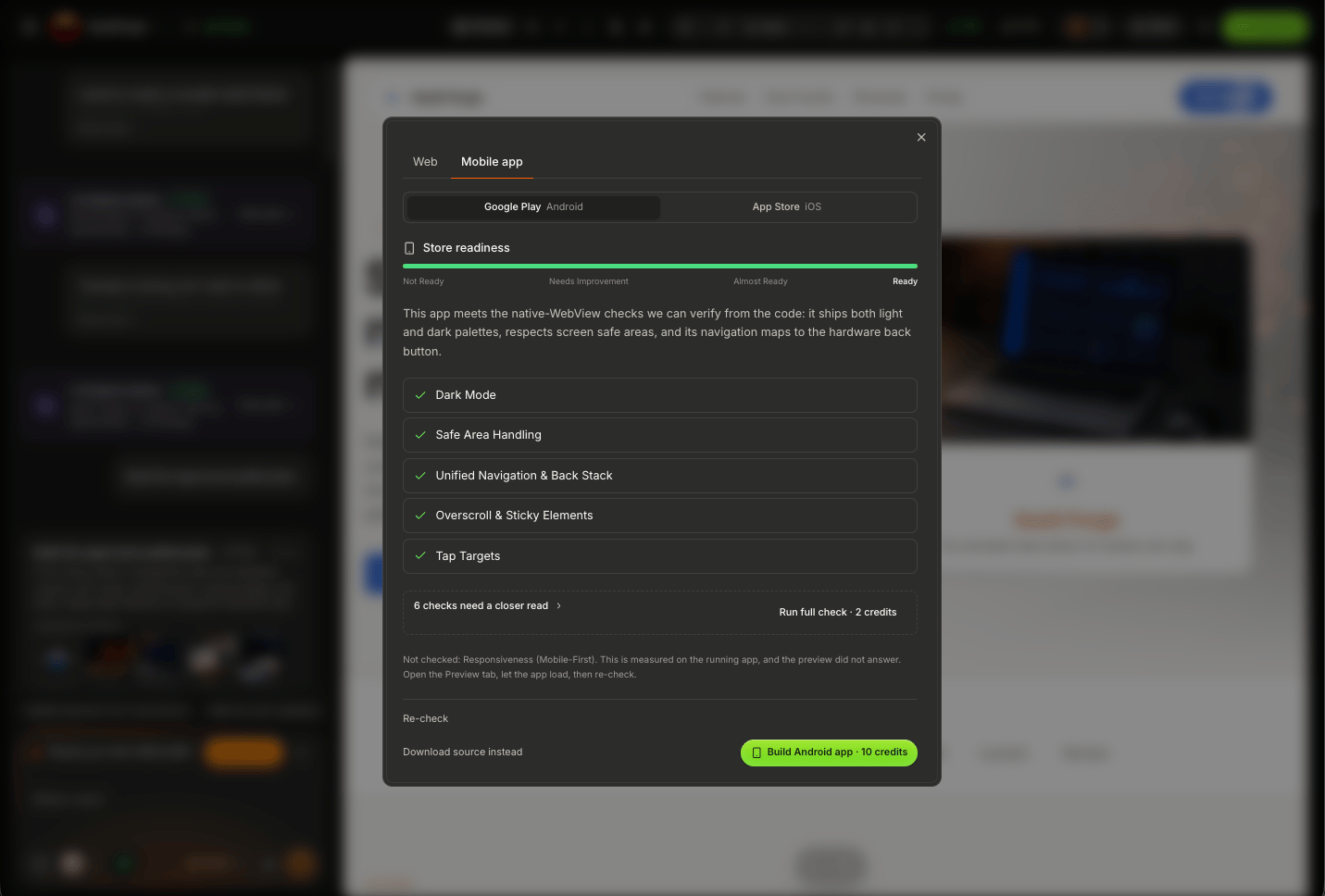
What Should Be Mobile-Ready?
Mobile readiness isn’t only about making the interface narrower. Your application needs to work well in a different usage environment. Important areas may include:- Navigation
- Touch interactions
- Forms
- Authentication
- Layouts
- Modals
- Tables
- Images
- File uploads
- Payments
- External links
- Responsive components
- Application workflows
Design for Touch
Desktop users have a mouse and keyboard. Mobile users primarily interact with their fingers. That means an interface like:Think About Mobile Navigation
A desktop application might use a large sidebar:Mobile Forms
Forms deserve particular attention. Suppose your application contains:- Name
- Phone
- Company
- Address
- Country
- Message
- Input sizes
- Dropdowns
- Date pickers
- File uploads
- Validation messages
- Submit buttons
- Keyboard behavior
- Long forms
Mobile Dashboards
Dashboards can be particularly challenging because they’re often designed around wide screens. A desktop dashboard might have:Optimize the CRM dashboard for mobile. Keep all existing desktop functionality, but make the navigation, customer list, filters, actions, and analytics comfortable to use on smaller touch screens.
Android Export
For eligible plans, AIWA can prepare your application for Android distribution. The Android workflow is generally:Android export is available on the Agency plan according to the current AIWA plan structure.
iOS Export
AIWA also supports the path toward distributing eligible applications on iOS. The workflow is similar:Exporting Isn’t the Same as Store Approval
This distinction is important. AIWA can help you prepare the application for mobile distribution. But the app stores control what is ultimately approved for their platforms. For example:- Developer requirements
- App policies
- Content policies
- Privacy requirements
- Metadata requirements
- Review processes
You Own Your Store Presence
When publishing an application, your app-store presence belongs to your product or business. For example:Mobile Export for Agencies
Mobile Export can be especially useful for agencies building products for clients. For example:- Web application
- Mobile application
Example: Booking Application
Suppose you build a booking platform for a fitness studio. The web application allows customers to:- Create an account
- View classes
- Book sessions
- Manage memberships
- View upcoming bookings
Example: Client Portal
An agency could build a client portal where customers:- View projects
- Check progress
- Review deliverables
- Download files
- Send messages
- Approve work
Example: SaaS Product
Imagine you’ve built a SaaS application with:- Authentication
- Dashboard
- Projects
- Team Members
- Billing
- Notifications
- AI Features
Web First Can Be a Good Strategy
Just because Mobile Export exists doesn’t mean every project needs a mobile app immediately. For many products, launching the web version first can help you:- Validate the idea
- Get customer feedback
- Fix workflows
- Understand usage
- Improve the product
- Avoid unnecessary complexity
Keep Mobile Users in Mind While Building
If you already know your application will eventually become a mobile app, tell AIWA early. For example:Build this application as a responsive web application that we plan to export to Android and iOS later. Make all primary workflows mobile-friendly and touch-friendly from the beginning.This can reduce the amount of adaptation needed later.
Mobile and Your Backend
Your mobile application may still depend on the same underlying application functionality. For example:Authentication
Before exporting, test authentication carefully on mobile. Test:- Signup
- Login
- Logout
- Protected screens
- Google authentication, where applicable
- Session persistence
- Password flows
- User roles
External Integrations
If your project uses connectors, test them in the mobile experience as well. For example:- Stripe
- Resend
- Twilio
- Cloudinary
- Google services
- AI providers
- Calendly
Payments on Mobile
Payments can require additional consideration when applications are distributed through app stores. The type of product, what you’re selling, and where the purchase occurs can affect which platform rules apply. Don’t assume that a web payment implementation can always be used unchanged inside a store-distributed application.Mobile Doesn’t Replace Your Web App
Exporting your project for mobile doesn’t mean you have to stop offering the web version. You may have:Before Mobile Export
A good checklist is:- Core application works
- Mobile layouts are responsive
- Navigation works on small screens
- Buttons are touch-friendly
- Forms work on mobile
- Authentication works
- Database workflows work
- Integrations work
- Important dialogs fit
- Tables are usable
- Images display correctly
- No unexpected horizontal scrolling
- Critical workflows are tested
The Mobile Export Journey
The complete workflow is:Next: Mobile Readiness Scan
Before generating a mobile build, you need to know whether your application is ready. On the next page, we’ll cover Mobile Readiness Scan, including:- What AIWA checks
- How to run a scan
- Understanding readiness issues
- Fixing mobile problems
- Re-running the scan
- Preparing for Android and iOS export
Mobile Readiness Scan
Run a readiness scan to identify mobile issues before exporting.